


The vast expanses of Kazakhstan are not just steppes but an incredible mosaic of natural landscapes, each corner guarding its own unique secrets. From the rugged peaks of the Tien Shan to ancient singing dunes, from turquoise lakes to relic forests — this priceless palette of pristine nature is carefully protected by a network of national parks. These areas are not just recreational zones, but living laboratories of biodiversity, open-air geological museums, and sacred lands offering a deep immersion into authentic wilderness.
Ile-Alatau State National Nature Park: Alpine Grandeur at the Foot of the Mountains

Spread across the northern slopes of the Zailiyskiy Alatau ridge (part of the great Tien Shan mountain system), Ile-Alatau National Park is the closest and most accessible natural oasis to the city of Almaty. Covering over 200,000 hectares, the park spans elevations from 600 to nearly 5,000 meters above sea level, creating unique vertical climate zones and ecosystems.
Geography and Climate:
The park is characterized by sharply defined altitude zones. There are seven natural belts — from steppe foothills to the nival zone of perpetual snow and glaciers. The climate is sharply continental, with extreme temperature fluctuations between day and night, as well as between seasons. Summers in the mountains are cool, while winters are snowy and long.
Flora and Fauna:
Ile-Alatau is a cradle of biodiversity. More than 1,500 species of plants grow here, many of which are endemic or relict — such as the famous Regel’s tulip. Forests consist of Tien Shan fir, spruce, birch, and aspen. The fauna includes about 250 species of vertebrates, including several red-listed species:
- Snow Leopard (Irbis): Elusive and majestic symbol of the region, with one of the most stable populations in Central Asia thanks to conservation efforts.
- Tien Shan Brown Bear: A large subspecies adapted to the region.
- Siberian Ibex (Tau-Teke): A mountain goat perfectly adapted to rocky terrains.
- Maral (Red Deer): A noble deer species.
- Birds: Golden eagle, bearded vulture, snowcock, bluebird, and many others.
Natural Phenomena and Tourism:
- High-Altitude Lakes: In addition to the famous Big Almaty Lake (BAO) with its shifting turquoise colors (requires passport as it is near a border zone), there is the restored Issyk Lake, and many other small glacial lakes.
- Waterfalls: Turgen Gorge boasts scenic waterfalls like Bear and Kayrak, with hiking routes of varying difficulty.
- Glaciers: Tuyuksu, Bogdanovich, and Shaman glaciers are part of a powerful system feeding mountain rivers.
- Skiing and Recreation: Shymbulak and Ak-Bulak resorts offer winter sports infrastructure. Numerous trails range from easy walks through gorges to multi-day treks, alpine climbs, and horse-riding tours.
- Botanical Trails and Birdwatching: These activities have strong potential due to the region’s species diversity.
Ile-Alatau is more than just a park — it is a full-fledged mountain system offering the chance to escape urban hustle and immerse yourself in the wild majesty of the Tien Shan within just a few hours.
Altyn-Emel State National Nature Park: Martian Landscapes and Singing Sand
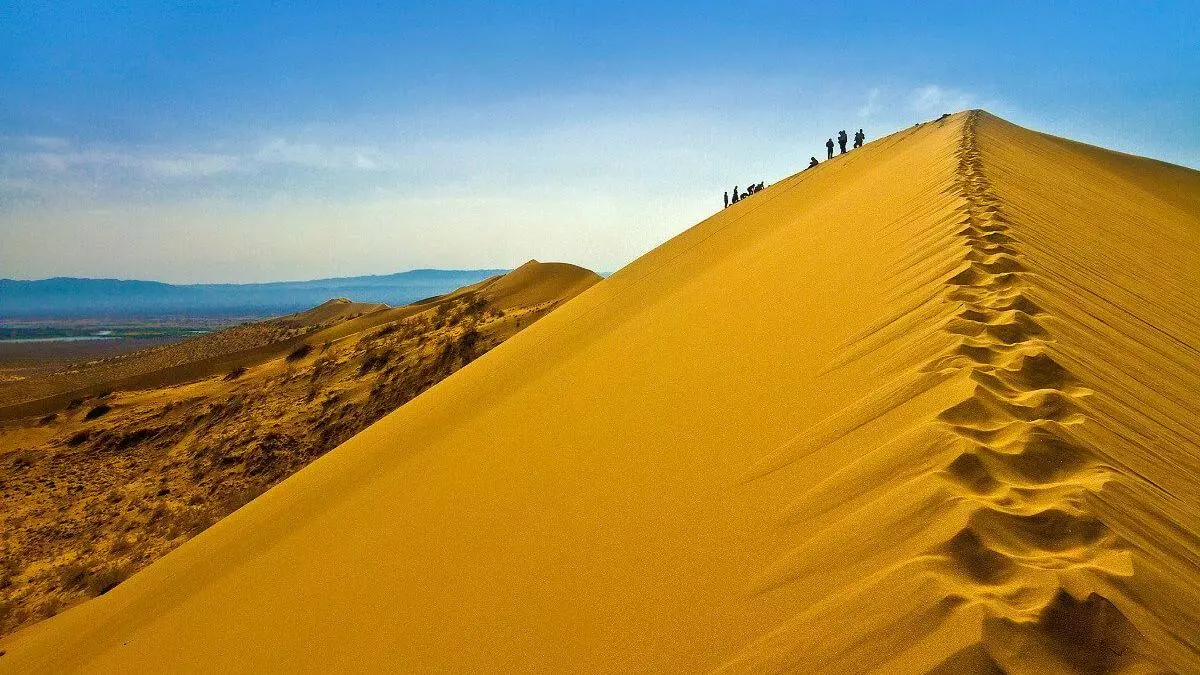
Located between the Ili and Karatal rivers in the northeastern part of Almaty Region, Altyn-Emel covers about 460,000 hectares. It features a unique desert-mountain landscape where harsh conditions have created fantastic natural formations.
Geography and Climate:
The park lies in a sharply continental climate zone, with scorching dry summers (over +40°C) and cold, snowless winters. Though it is a desert and semi-desert region, the proximity to the Ili River and natural springs gives rise to unexpected oases of life.
Flora and Fauna:
Despite the harsh environment, life here has adapted well. Vegetation includes desert and semi-desert species, saxaul thickets, and tugai forests along rivers. The fauna includes over 260 species of vertebrates, including rare and endangered animals:
- Kulan (Asiatic Wild Ass): The park is a key site for the successful reintroduction and restoration of the kulan population.
- Goitered Gazelle (Dzheiran): A graceful steppe antelope that is actively recovering here.
- Argali: Wild mountain sheep found in rocky foothills.
- Birds: Bustards, sandgrouse, eagles, falcons — a rich avian life in steppe and riverine habitats.
- Reptiles: Numerous species of lizards and snakes.
Natural Phenomena and Tourism:
- Singing Dune: The park’s iconic attraction. This massive sand dune (up to 3 km long and 150 m high) emits a low, humming sound — like an organ — under certain wind conditions due to sand grain movement.
- Aktau Mountains (“White Mountains”): Stunning erosion-formed hills made of colorful clay, sandstone, and conglomerates. Their palette includes white, red, orange, pink, and blue hues — creating Martian or lunar-like scenery.
- Katutau Mountains (“Frozen Mountains”): Volcanic formations eroded into bizarre, often dark shapes resembling giant statues.
- Tanbaly-Tas Petroglyphs: Bronze Age rock carvings, evidence of ancient cultures.
- Tourism: Jeep tours are popular for covering major sites. Ideal for wildlife watching, photography, and astrotourism thanks to clear skies.
Altyn-Emel is not just a park, but an open-air geology textbook, a wildlife reintroduction site, and a place where the desert gains a unique, melodic voice.
Charyn State National Nature Park: A Mini Grand Canyon

Located southeast of Almaty near the Chinese border, the Charyn Canyon is an extraordinary geological formation on the Charyn River. The park spans about 125,000 hectares and showcases nature’s power in breathtaking shapes and scales.
Geography and Climate:
The park lies in a sharply continental climate zone. The canyon itself stretches for about 150 km, with the most accessible section for visitors being the “Valley of Castles.” The landscape features deep gorges carved in sedimentary rocks, surrounded by dry steppe.
Natural Phenomena and Tourism:
- Valley of Castles: The most famous and striking part of the canyon, stretching about 2 km. Millions of years of water and wind erosion sculpted surreal forms in red sandstones and conglomerates — resembling medieval castles, towers, minarets, and fantastical beings. The canyon’s depth reaches 150–300 meters.
- Other Canyons: The park includes lesser-known but equally fascinating canyons like the Moon Canyon (with softer shapes and lighter tones), Yellow Canyon, and Red Canyon.
- Relict Ash Grove: Along the Charyn River lies a rare Sogdian ash grove — a living remnant of pre-glacial flora. Some trees are over 200–300 years old.
- Charyn River: A powerful river flowing through the canyon, supporting life and offering rafting opportunities (for trained groups).
- Tourism: The main activity is hiking through the Valley of Castles. Photography tours, jeep tours, and camping are also popular.
Charyn Canyon is more than a deep ravine — it’s a grand geological museum where each rock layer tells millions of years of Earth’s history, and the sculpted formations inspire awe and wonder.
Kolsai Lakes State National Nature Park: Tien Shan’s Jewels and a Sunken Forest
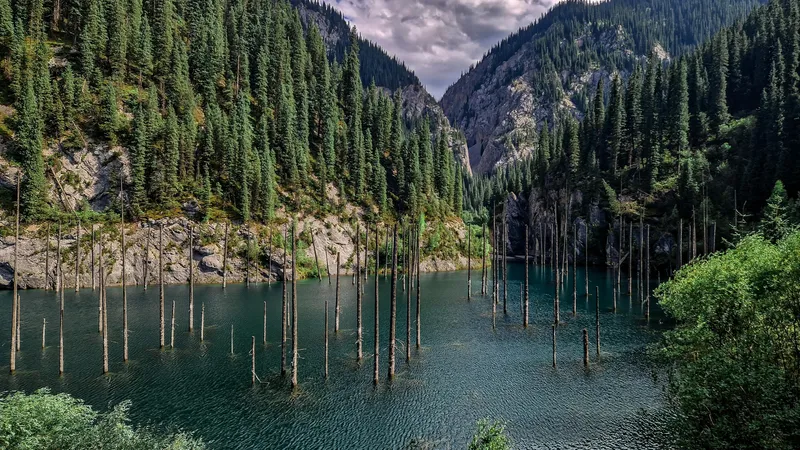
Located in the Northern Tien Shan, east of Ile-Alatau, this park is famous for its cascade of alpine lakes — often called the “jewels of the Tien Shan.” It spans over 160,000 hectares.
Geography and Climate:
The park includes mountain ridges and gorges. The climate is high-altitude, with cooler summers and very snowy winters. The lakes are surrounded by dense coniferous forests of Tien Shan spruce.
Flora and Fauna:
Typical for mountain forests and subalpine meadows. Red-listed species include maral, Siberian ibex, occasionally lynx, and a rich diversity of birds.
Natural Phenomena and Tourism:
- Three Kolsai Lakes:
- Lower Kolsai Lake (Kolsai-1): The largest and easiest to reach. It features guest houses and boat rentals.
- Middle Kolsai Lake (Kolsai-2): Located 8 km farther by foot or horseback — more secluded and surrounded by dense forest.
- Upper Kolsai Lake (Kolsai-3): The highest and most remote — an additional 4–5 km from Kolsai-2. Requires good physical condition. Near the border with Kyrgyzstan.
- Kaindy Lake: About 11 km from Kolsai-1 (accessible only by 4WD). Formed after a 1911 earthquake blocked a gorge. Its iconic feature is the ghostly tops of sunken Tien Shan spruces rising from turquoise waters. The crystal-clear lake reveals the trunks below the surface, attracting divers.
- Ecotourism and Outdoor Activities: Ideal for hiking and horseback treks of various difficulty, fishing, and photography. A network of guesthouses in the villages of Saty and Kurmenty allows visitors to experience local culture.
Kolsai Lakes and Kaindy are places of unmatched beauty and tranquility, where majestic mountains meet a mystical sunken forest — a dream for nature lovers.
Burabay (Borovoe) State National Nature Park: Oasis of Steppes and Legends

Located far to the north in Akmola Region, in the northern part of the Saryarka (Kazakh Uplands), Burabay (commonly known as Borovoe) covers about 129,000 hectares. It is a natural oasis that stands in stark contrast to the surrounding endless steppe.
Geography and Climate:
The park features a scenic combination of lakes and granite mountains covered in pine forests. The climate is milder than the southern deserts but still continental, with distinct seasons. Thanks to the abundance of lakes and forests, a unique humid microclimate is formed.
Flora and Fauna:
Dominated by pine and birch forests, and rich wildflower meadows. Fauna includes typical forest-steppe species: moose, roe deer, wild boar, lynx, martens, and many waterfowl species on the lakes.
Natural Phenomena and Tourism:
- Land of Lakes: Dozens of glacial lakes, each with its own legend:
- Burabay (Borovoe): The most iconic, giving the region its name.
- Shchuchye: The deepest, surrounded by resorts and sanatoriums.
- Big Chebachye: One of the largest.
- Auliekol (“Sacred Lake”): Surrounded by myths.
- Rock Formations: Granite formations shaped by wind erosion into fantastic forms:
- Okzhetpes (“Unreachable by Arrow”): Symbol of the park, resembles an elephant or camel.
- Zhumbyktas (“Mystery Rock” or “Sphinx”): Changes appearance depending on the viewing angle.
- Mountains: Kokshetau (Sinyukha), Burabay, Zheke-Batyr.
- Developed Infrastructure: Unlike many parks, Burabay has long been a resort area. It boasts hotels, sanatoriums, tourist bases, and rental services, making it ideal for family vacations, wellness trips, and comfortable ecotourism.
- Legends and Culture: Deeply connected with Kazakh history and mythology, the park features sacred places and pilgrimage sites.
Burabay is not just a park — it is a complete tourist cluster where nature’s grandeur harmonizes with comfort, offering rejuvenation and aesthetic joy amid legends.
National Parks of Kazakhstan: Gateways to Wild Beauty and Adventure
Kazakhstan’s national parks are not just protected areas — they are entire worlds, each with its own character, history, and unique beauty. They invite us into a profound dialogue with nature, a realization of its power and fragility. These gems of ecotourism are a priceless national treasure, opening the door to real adventures and unforgettable memories.
0 Comment