
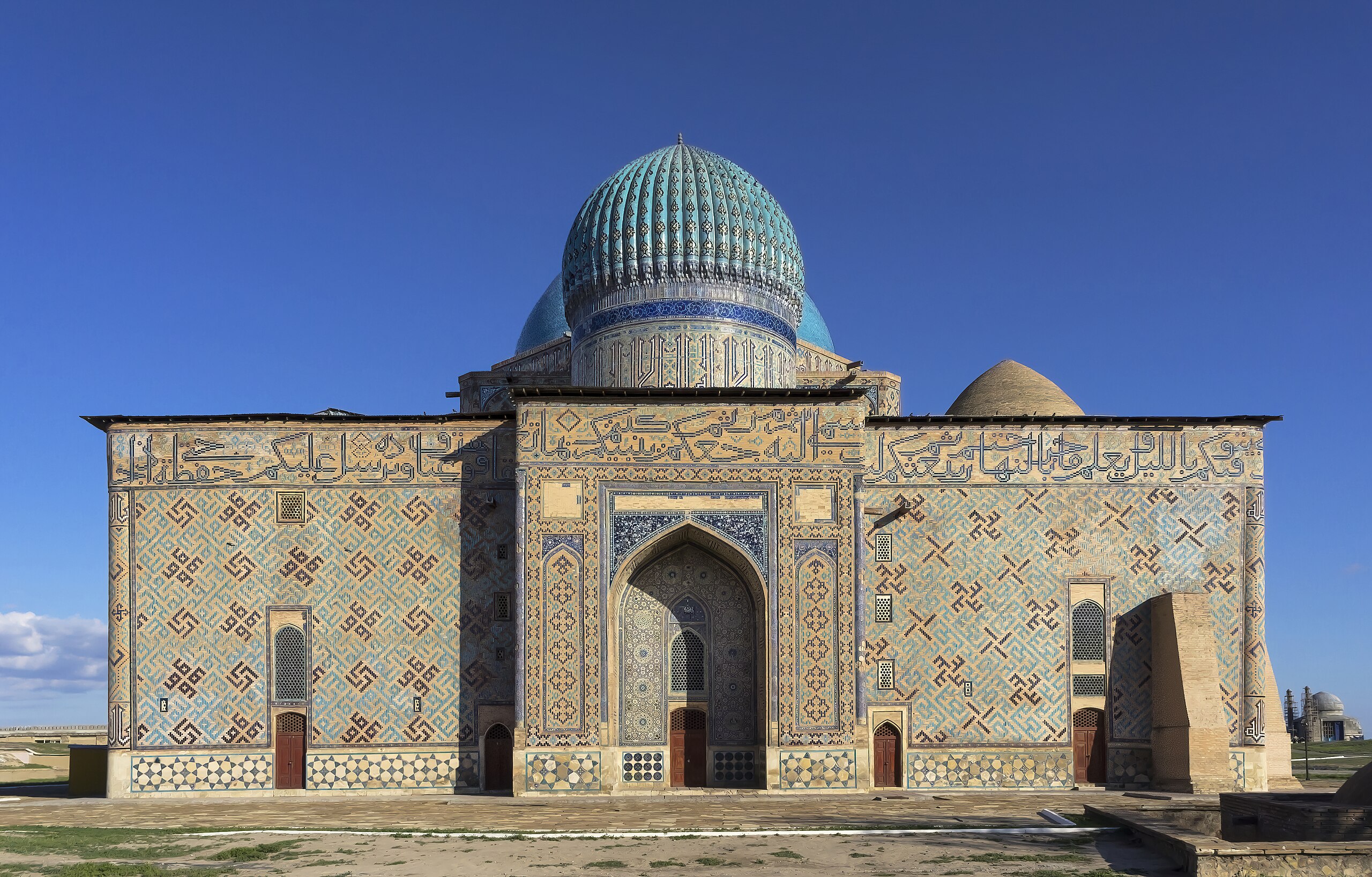

In the pre-dawn silence of the steppe, a Sufi poet bows before the mausoleum of Khoja Ahmed Yasawi, whispering verses about eternity. His words blend with the wind, while the turquoise dome above him catches the first rays of the sun like a reflection of the heavens. The mausoleums of Kazakhstan are not just stone sanctuaries — they are voices of the past, telling tales of love, wisdom, and the search for truth. With QazaQ Adventure, we set out on a journey where each step is a dialogue with eternity.
The Sufi Soul of Kazakhstan
Kazakhstan’s mausoleums are more than just architecture. They embody Sufism — a philosophy in which one seeks the divine through love and harmony. In the 12th century, Khoja Ahmed Yasawi, founder of the Yasawiya order, preached in Turkistan, inspiring nomads with his poetry about unity with the universe. His mausoleum, built by Tamerlane, became a place of pilgrimage, while others — Arystan-Bab, Aisha-Bibi, Karakhan — continued the tradition.
These sites are not only UNESCO monuments but mirrors of nomadic culture, where steppe, sky, and faith blend into one. Their architecture — from domes to ornaments — carries deep symbolism: stars represent the path to the divine, flowers mean life, and geometry stands for the cosmic order. For travelers, the mausoleums are not just sights to behold, but feelings to absorb — the past speaking through stone.
Temples of Time: Architecture of the Mausoleums
Khoja Ahmed Yasawi: Dome of the Heavens
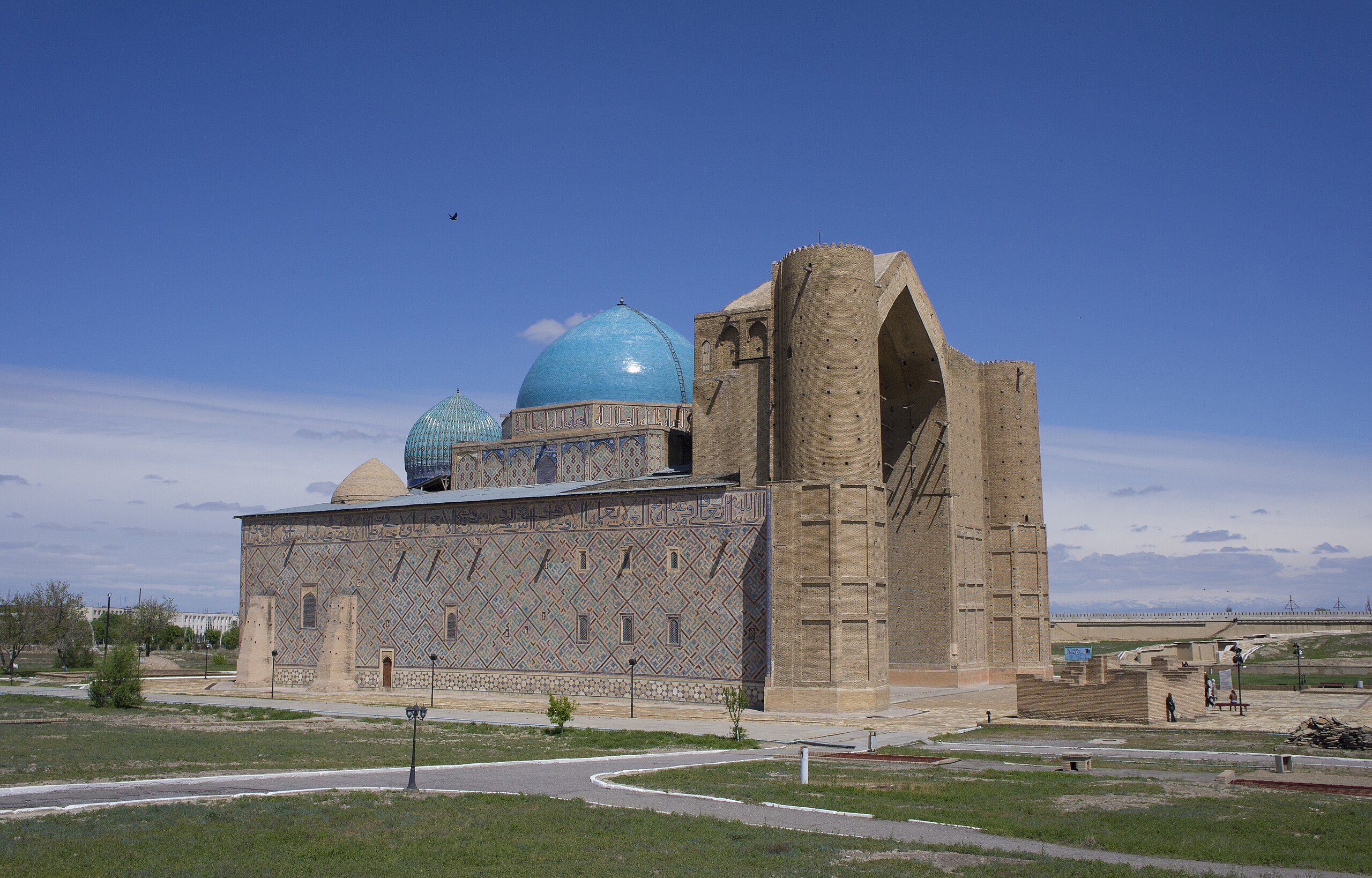
The mausoleum of Khoja Ahmed Yasawi in Turkistan is a 14th-century masterpiece, built by the will of Tamerlane. Its 39-meter-high arch adorned with blue mosaics symbolizes the celestial vault, while the turquoise dome radiates divine light. Inside lies Yasawi’s tomb and a two-ton bronze kazan (cauldron) used to prepare food for pilgrims. Legend has it that Tamerlane saw Yasawi in a dream, which inspired him to build the monument.
Every detail of the mausoleum tells a story: the mosaics depict stars that lead to truth, and Yasawi’s underground cell reflects his 40 years of solitude. Walking through the inner courtyard opens views of the minarets, and the silence invites deep reflection on Sufi wisdom.
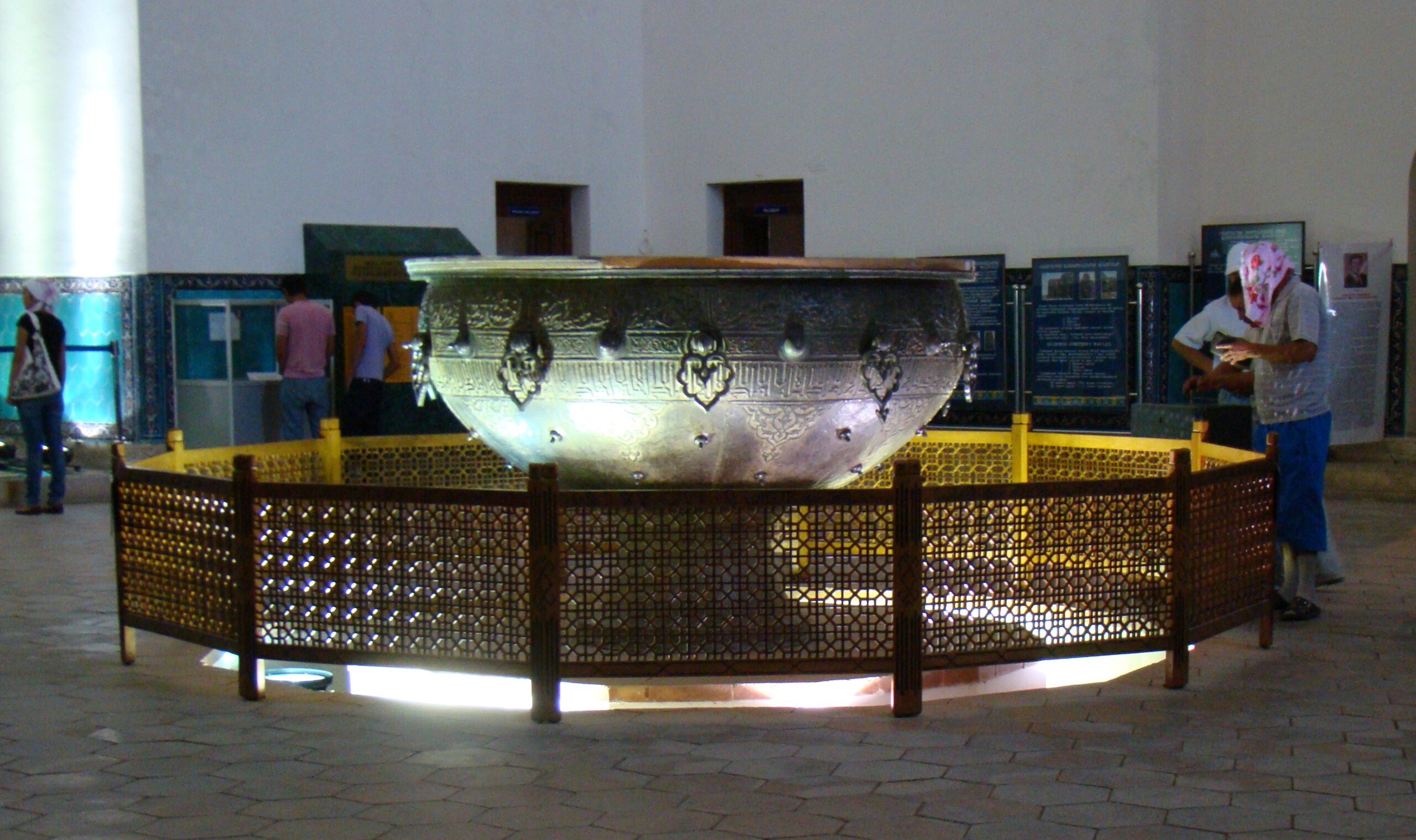
- What to see: Blue mosaics, kazan, Yasawi’s cell, minarets
- Things to do: Study mosaics, meditate, take photographs
- Tip: Visit the dome at sunrise — its glow is mesmerizing
Arystan-Bab: Humility and Wisdom
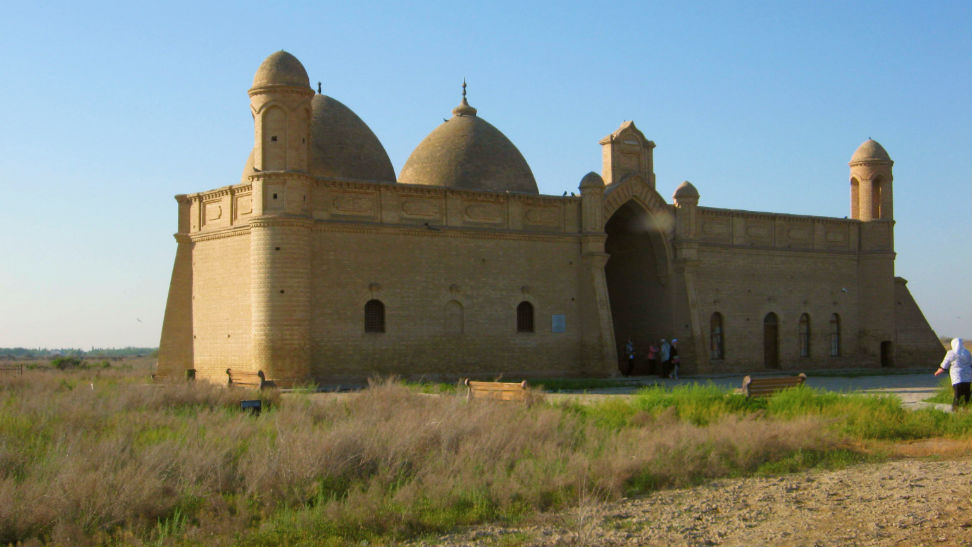
Forty kilometers from Turkistan in Otrar stands the mausoleum of Arystan-Bab, Yasawi’s mentor. Built in the 14th century, it is modest: white walls, a green dome, and a small garden. Yet its strength lies in its spiritual depth. Legend says Arystan-Bab passed Yasawi a dried date — symbol of knowledge — and his tomb became a place of prayers for wisdom.
The architecture is simple — which is the essence of Sufism: truth lies in humility. Pilgrims visit before heading to Yasawi’s mausoleum, and travelers find peace in the garden, where the wind whispers ancient poetry. Photographers capture reflections of the dome in the pond, creating tranquil frames.
- What to see: Green dome, garden, tomb of Arystan-Bab
- Things to do: Reflect in the garden, hear legends, photograph
- Tip: Sit quietly in the garden — its silence inspires
Aisha-Bibi and Babaji-Khatun: Patterns of Love
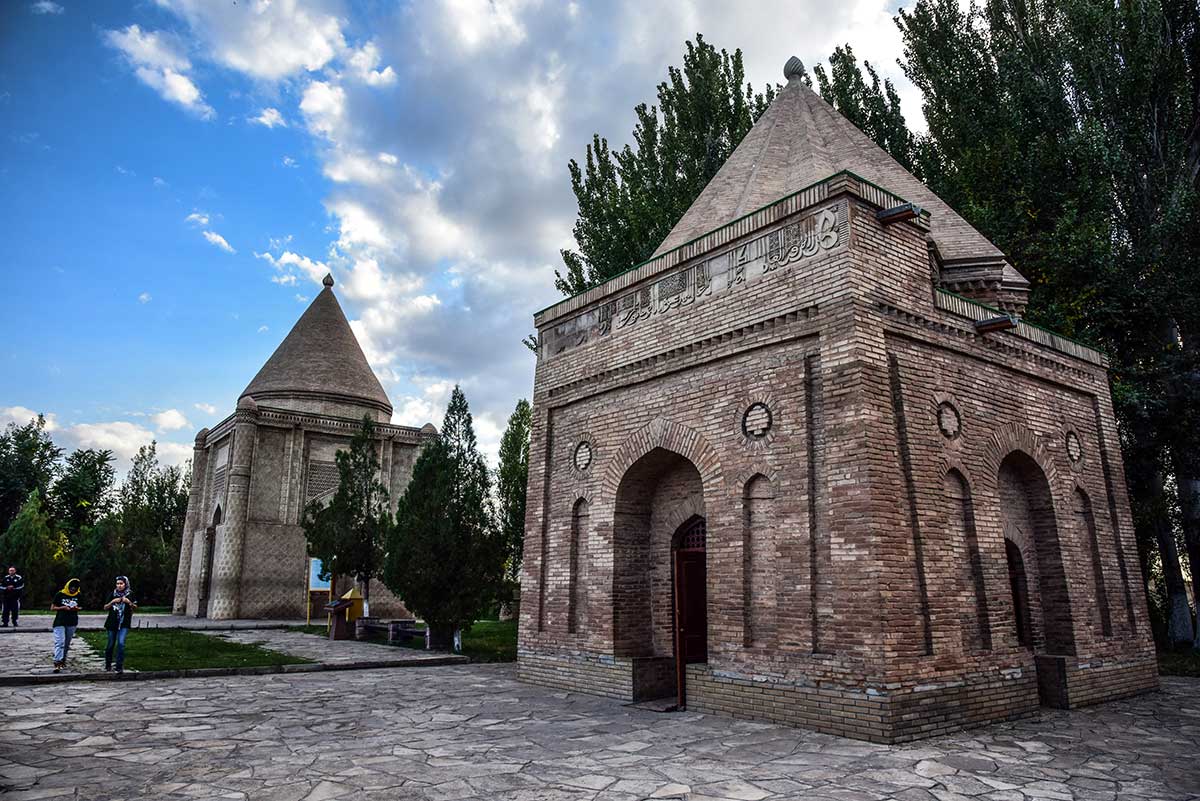
The Aisha-Bibi Mausoleum near Taraz is a stone poem built in the 11th century. Legend says Aisha-Bibi died while hurrying to her beloved Karakhan, who built her this mausoleum adorned with 60 types of terracotta patterns. Each ornament has meaning: flowers represent love, stars eternity. Nearby is the Babaji-Khatun Mausoleum, her companion, with a dome shaped like a starry sky.
These mausoleums are for those who believe in love. At sunset, Aisha-Bibi’s ornaments glow gold, and the quiet steppe makes time stand still. Guides share stories of poets inspired by this tale, while visitors find answers in the intricate designs.
- What to see: Terracotta patterns, Babaji-Khatun’s dome, steppe landscapes
- Things to do: Explore the ornaments, take photos, reflect
- Tip: Photograph the patterns at sunset — they come alive in the light
Karakhan: Warrior and Guardian
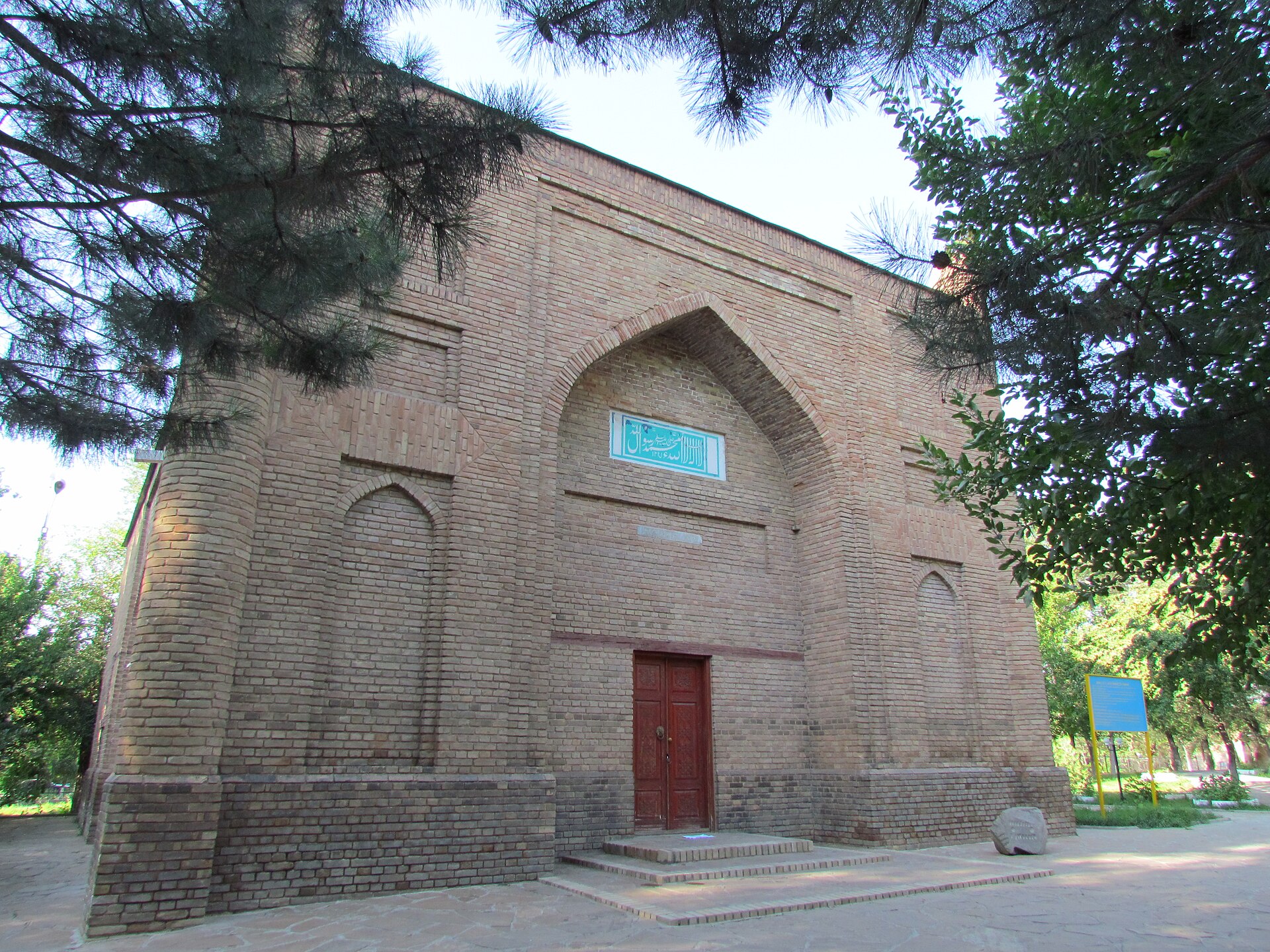
Near Aisha-Bibi stands the mausoleum of Karakhan, her beloved. Its bold lines and massive dome contrast with Aisha-Bibi’s elegance, but together they form a harmony of strength and tenderness. Built in the 11th century, it symbolizes the warrior honor of nomads. Legend says Karakhan guards the steppe, and his tomb is a place of power for travelers.
Walking between the two mausoleums (300 m) lets you feel the link between past and present. Guides tell tales of nomadic khans, and the steppe wind adds a mystical touch. This is a place for those seeking balance between strength and peace.
- What to see: Massive dome, steppe views, Aisha-Bibi nearby
- Things to do: Stroll, hear legends, photograph
- Tip: Visit both mausoleums — their contrast is inspiring
A Spiritual Journey Through the Mausoleums
Kazakhstan’s mausoleums offer more than sightseeing — they provide a sacred experience:
- Silence and reflection: Arystan-Bab’s garden or Aisha-Bibi’s steppe are perfect for pondering life and eternity
- Sufi stories: Guides share Yasawi’s poems and Sufi philosophy, helping travelers grasp deeper meaning
- Architectural insight: Studying Yasawi’s mosaics or Aisha-Bibi’s patterns reveals cosmic symbolism
- Photos with soul: Domes, mosaics, and vast steppe scenes create meaningful shots
- Tip: Bring a notebook to jot down thoughts — mausoleums awaken inner dialogue
When to Visit the Mausoleums
Each season brings a special atmosphere:
- Spring (March–May): Blooming gardens and mild weather (10–20°C) offer serenity
- Autumn (September–November): Golden steppe and 5–15°C temperatures are ideal for reflection and photos
- Summer (June–August): Warm (20–30°C) with more pilgrims — mornings offer peaceful solitude
- Tip: Early morning is best for feeling the sacredness without the crowds
Final Thoughts
The mausoleums of Kazakhstan echo with ancient voices in their mosaics, domes, and steppe winds. Khoja Ahmed Yasawi teaches us to seek truth, Arystan-Bab offers wisdom, Aisha-Bibi and Karakhan remind us of love, and Babaji-Khatun symbolizes eternity. These are not just historical sites — they ask us: what does it mean to live consciously? With QazaQ Adventure, you’ll find your answers while walking sacred paths. Start your journey and share your thoughts online — what mysteries of the mausoleums inspired you?
0 Comment