
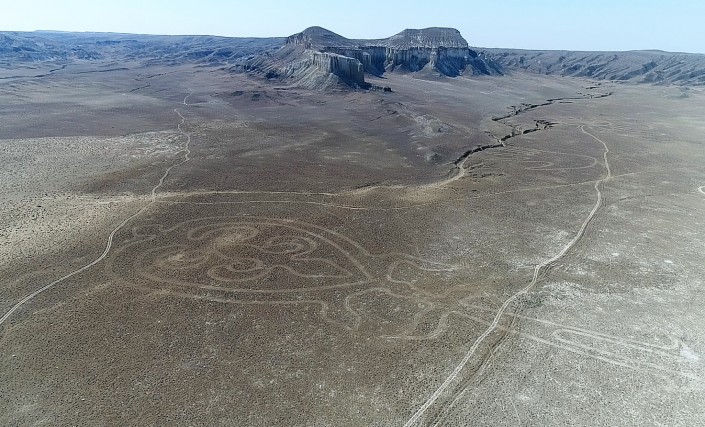

In the pre-dawn haze of the desert, a pilgrim walks toward the necropolis of Beket-Ata, where silence speaks louder than words. The cliffs of Mangystau, carved by wind and time, hold the echo of ancient prayers and nomadic legends. From the Martian landscapes of Bozzhira to the mystical mountain of Sherkala, these valleys are more than nature — they are sanctuaries where the soul meets eternity. With QazaQ Adventure, we embark on a journey through the sacred sites of Mangystau to hear the whisper of the desert.
The Spiritual Heart of Mangystau
Mangystau is a land where nature and spirituality are intertwined. The valleys and necropolises of the region — such as Beket-Ata — are revered sacred places deeply connected with Sufi traditions and nomadic culture. Locals believe that the spirits of ancestors dwell here, and pilgrims come to seek blessings. The cliffs and deserts of Mangystau, formed millions of years ago by an ancient sea, preserve both geological and spiritual history.
These places attract not only pilgrims but also those seeking solitude. Geological wonders — like the chalk cliffs of Bozzhira or the spherical concretions of Torysh — sit beside necropolises, creating a landscape where every stone feels part of eternity. For the traveler, Mangystau offers the chance to reflect on time, nature, and one’s place in the world.
Sacred Landscapes of Mangystau
Sherkala: The Desert’s Guardian Mountain

Sherkala Mountain, rising in the heart of the desert, resembles a sleeping lion or ancient fortress. Its name means “Lion Mountain,” and local legends say it guards the steppe. Composed of chalk and limestone, Sherkala changes color from white to golden at sunset, offering a mesmerizing sight. Pilgrims consider it a place of power, while photographers praise it as a perfect visual subject.
Hikes around the mountain (1–2 km) reveal expansive desert views, and the silence inspires contemplation. Guides share nomadic myths about Sherkala, where every rock formation tells a part of ancient history.
- What to see: Chalk slopes, sunset colors, desert landscapes
- Activities: Hiking, meditation, photography
- Tip: Reach the foot of the mountain at sunset — the light brings it to life
Bozzhira: Martian Scenery on Earth

The Bozzhira Valley is a landscape that looks like another planet. Chalk cliffs, canyons, and spires sculpted by the wind create a surreal scene. Geologists say that millions of years ago this was a sea, and today Bozzhira is a place where time seems to stand still. Nomadic legends call it the “valley of spirits,” where you can hear the whispers of ancestors.
Visitors find solitude and inspiration here. Walks through the valley (2–3 km) offer views of towering white spires, and photographers love the play of light and shadow. It’s a place where silence becomes tangible.
- What to see: Chalk spires, canyons, endless desert horizons
- Activities: Hiking, photography, reflection
- Tip: Visit at sunrise — the light enhances the rock textures
Beket-Ata: Necropolis and Pilgrimage
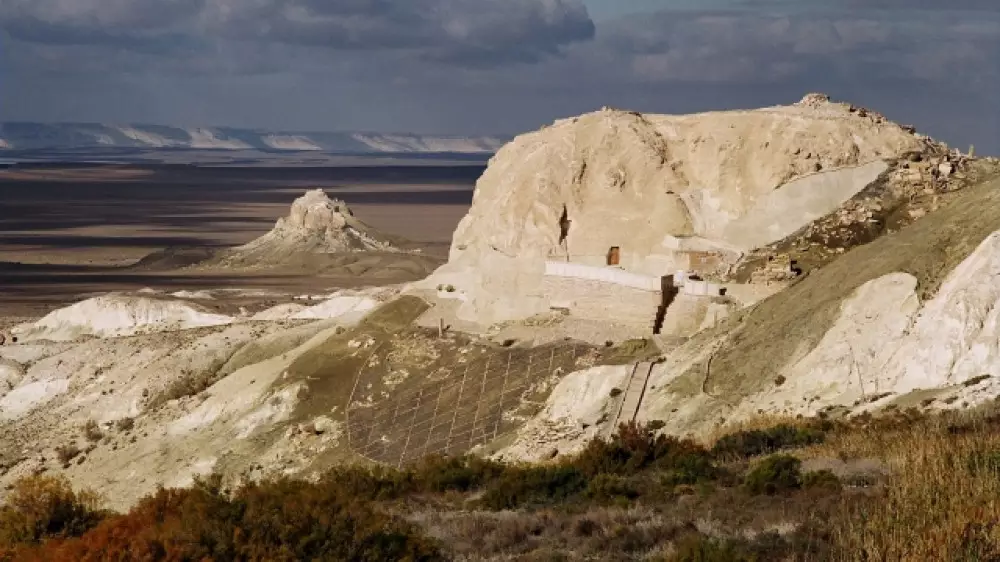
The necropolis of Beket-Ata, a cave mosque carved into rock, is one of the most sacred places in Mangystau. Beket-Ata, an 18th-century Sufi saint, preached here, and his grave has become a pilgrimage site. The simple architecture — whitewashed walls and low arches — contrasts with the powerful spiritual presence. Legend has it that prayers here reach the heavens.
Pilgrims seek blessings, while travelers come for the silence and stories. Walks around the necropolis (500 m) offer a sense of connection to the past, and guides share tales about the life of Beket-Ata.
- What to see: Cave mosque, Beket-Ata’s grave, rock formations
- Activities: Meditation, learning legends, photography
- Tip: Respect the silence — this is a place of pilgrimage
Torysh Valley: Geological Mysteries
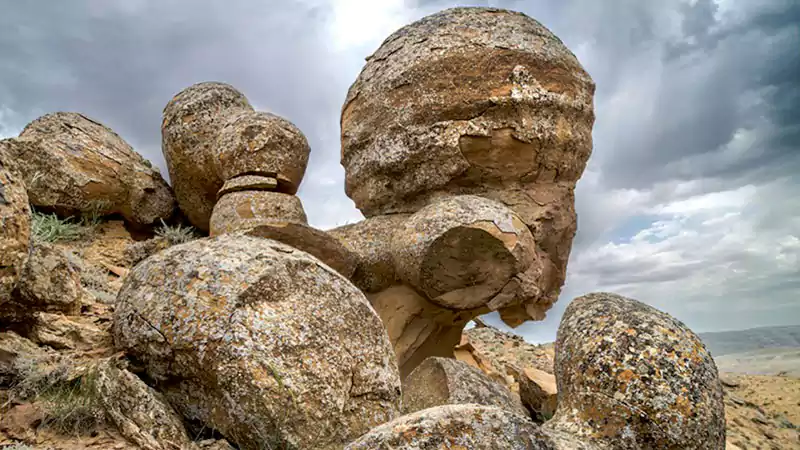
The Torysh Valley is scattered with spherical stones, as if giants had tossed them across the land. These concretions, formed naturally millions of years ago, are a source of debate among scientists and legends among locals. Some believe they are fossilized dinosaur eggs, others call them gifts of the spirits. Torysh is where nature plays with the imagination.
Walks in the valley (1–2 km) inspire reflection on the nature of time, and photographers catch the strange shapes against the desert backdrop. It’s the perfect place for those seeking mystery and quiet.
- What to see: Spherical concretions, desert views
- Activities: Hiking, photography, learning myths
- Tip: Bring water — it’s hot even in the morning
A Spiritual Experience in the Valleys
Mangystau is not just about scenery — it’s a space for inner exploration:
- Silence and reflection: The deserts near Sherkala and Bozzhira are ideal places to pause and think about eternity.
- Sufi legends: Guides at Beket-Ata share stories about the saint’s life and the Sufi worldview.
- Geological awe: The formations in Torysh and Bozzhira make you ponder millions of years of Earth’s history.
- Photos with soul: The Mangystau landscapes — from white spires to starry skies — create images full of mystery.
Best Time to Visit
Mangystau transforms with the seasons:
- Spring (March–May): Mild temperatures (10–20°C), desert blooms, fewer tourists
- Autumn (September–November): Cooler (5–15°C), perfect for walks and photography
- Summer (June–August): Hot (25–35°C), but sunsets and starry skies make it worthwhile
Tip: Early morning or evening is the best time for peaceful light and quiet surroundings.
The sacred valleys of Mangystau are a desert whisper calling you to reflect. Sherkala guards the steppe, Bozzhira astonishes with Martian views, Beket-Ata offers spiritual power, and Torysh preserves time’s riddles. These places ask deep questions: What does it mean to be part of eternity? With QazaQ Adventure, you’ll find answers as you walk the sands of Mangystau. Start your journey and share — what secrets of the desert inspired you?
0 Comment